Mixed-Use Magic: How Miami is Changing the Way We Live

.svg)
Why Miami Mixed Use Buildings Are Redefining Urban Living
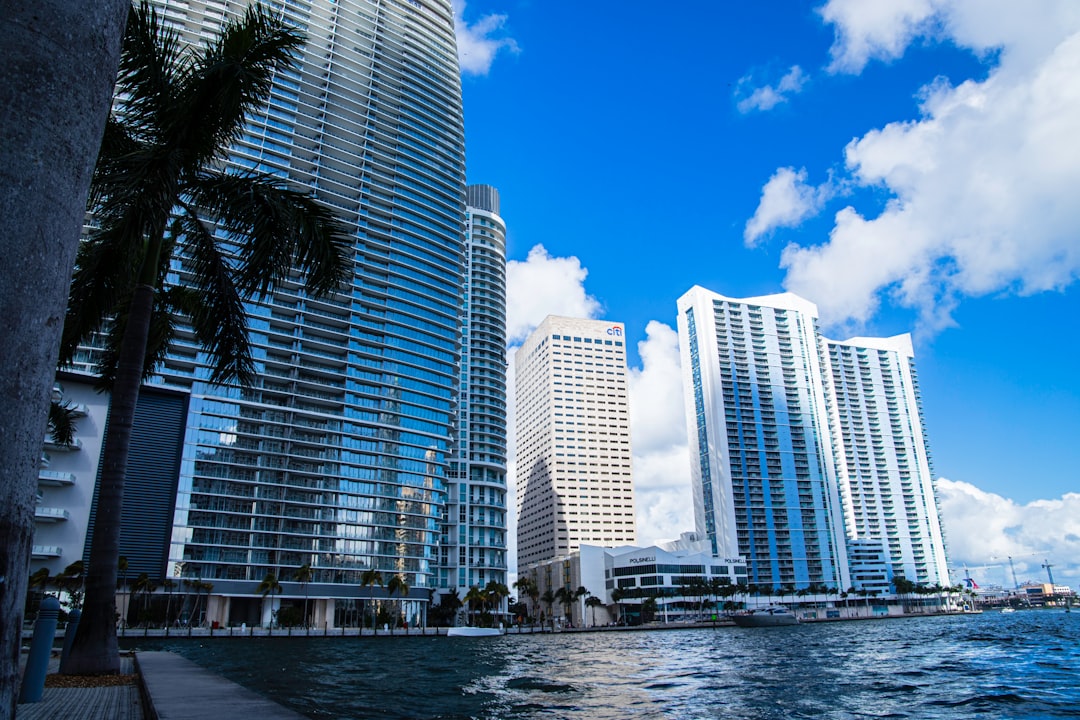
Miami mixed use buildings are reshaping how people live, work, and play across one of America's fastest-growing cities. These developments combine residential units, retail, dining, office space, and amenities — all under one roof or within one walkable block.
Here's a quick snapshot of what makes Miami's mixed-use market stand out:
| Feature | Details |
|---|---|
| Active listings (Miami-Dade) | 140+ mixed-use properties for sale |
| Price range | $300,000 – $34,275,000+ |
| Size range | 609 SF – 151,353 SF |
| Cap rates | 4.3% – 10.29% |
| Notable developments | The Douglas, Little River District, Wynwood Hubs |
| Key neighborhoods | Wynwood, Brickell, Downtown, North Miami |
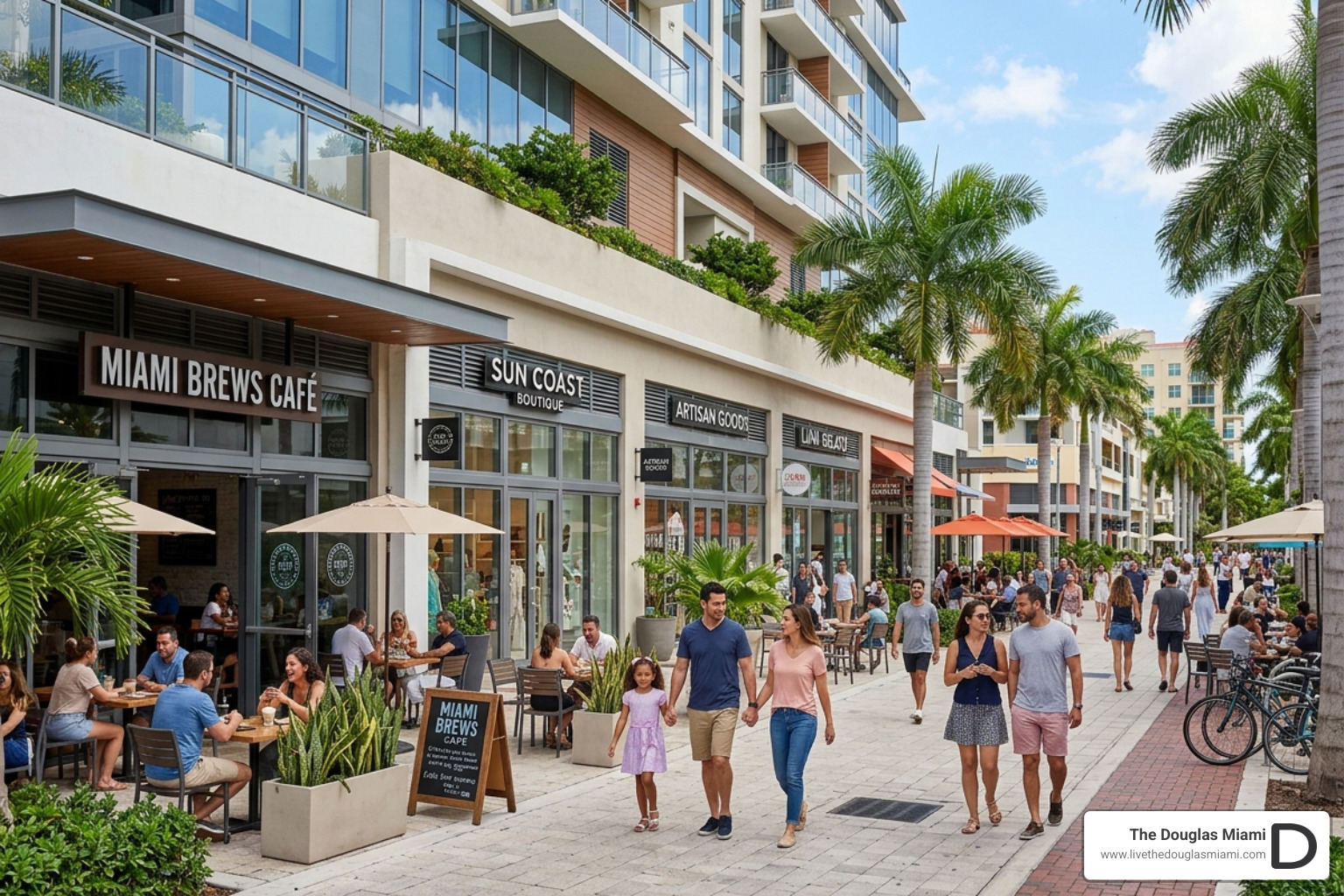
Miami has spent the last decade transforming from a sprawling, car-dependent metro into a city built around walkability and density. The result? A skyline full of towers where a resident can grab coffee, hit the gym, close a work deal, and watch the sunset — without ever leaving the building.
That shift isn't accidental. It's driven by smart zoning, state legislation, and serious investment from developers who see Miami as one of the most dynamic urban markets in the country.
I'm Gunnar Blakeway-Walen, Marketing Manager at FLATS® and a multifamily real estate marketing specialist with experience across urban mixed-use portfolios — the same property category reshaping miami mixed use buildings today. With that lens, this guide breaks down everything you need to know about Miami's mixed-use landscape, from the architecture to the investment numbers.
The Evolution of Miami Mixed Use Buildings
The story of Miami's growth is no longer just about suburban sprawl; it is about the "urban heart." We have seen a massive wave of urban revitalization sweeping through neighborhoods that were once industrial or overlooked. Areas like Wynwood, Little Havana, and North Miami have transitioned from single-use districts into vibrant, 24/7 hubs.
In Wynwood, for example, the transformation was led by art and retail, but it was the arrival of miami mixed use buildings that solidified it as a place to live. Today, you can walk from a world-class gallery to your luxury apartment, passing through a ground-floor retail promenade that serves everything from artisanal sourdough to high-end streetwear. This evolution is mirrored in major city-wide approvals for large-scale, integrated living, which further cements the commitment to urban density.
For those keeping an eye on the pulse of the city, our Property News Updates frequently highlight how these projects are not just buildings—they are the new neighborhood anchors.
Zoning and Planning for Miami Mixed Use Buildings
A major reason we see so many cranes in the sky is the progressive zoning and planning within North Miami and Miami-Dade County. Local governments have realized that to solve housing shortages and traffic congestion, they need to build "up" and "together."
One of the most significant game-changers in recent years is Florida's Live Local Act. This legislation allows developers to increase building density and height in exchange for providing workforce housing—units reserved for residents earning up to 120% of the Area Median Income (AMI). We are seeing this play out in real-time across the county, where new towers are leveraging the Live Local Act to provide workforce housing, effectively changing the scale of development along transit corridors.
Furthermore, Rapid Transit Zones allow for reduced parking requirements and increased height for projects near public transit. A prime example is when Construction Starts on 7737 NE 2nd Ave, signaling a new era for the Little River and North Miami neighborhoods. By integrating residential units with commercial space in these transit-rich areas, the city is becoming more accessible and pedestrian-friendly.
Typical Features of Modern Miami Mixed Use Buildings
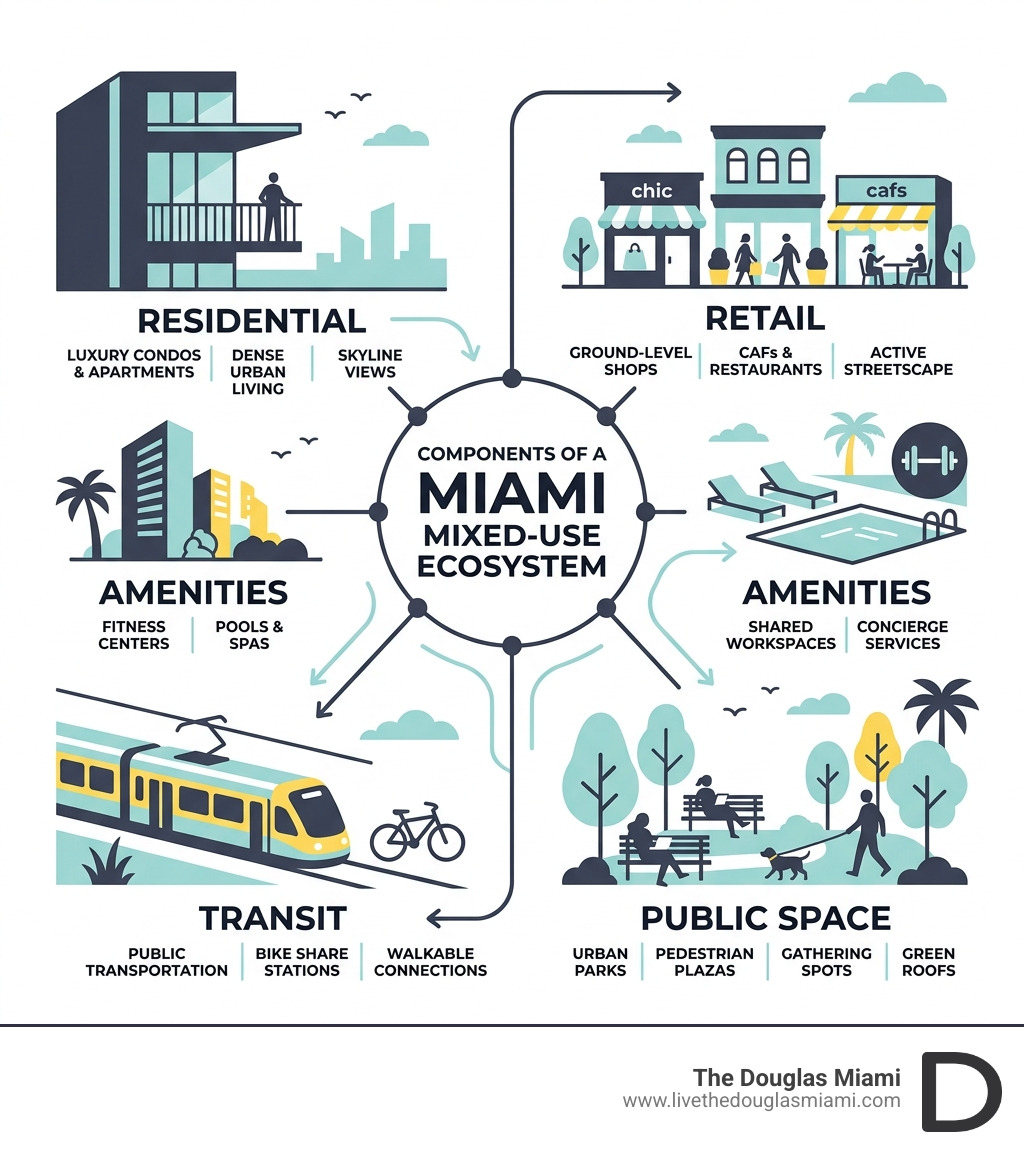
What does a modern mixed-use building actually look like in 2026? It’s far more than just "apartments over shops." These buildings are designed as ecosystems.
Typical features include:
- Expansive Retail Space: Usually located on the ground floor to encourage foot traffic and create a "high-street" feel.
- Smart Technology: From high-speed fiber-optic internet to custom building apps that handle everything from guest access to booking a spa treatment.
- Luxury Residences: Units often feature 10-foot ceilings, floor-to-ceiling glass, and high-end finishes like Italkraft cabinetry and Subzero appliances.
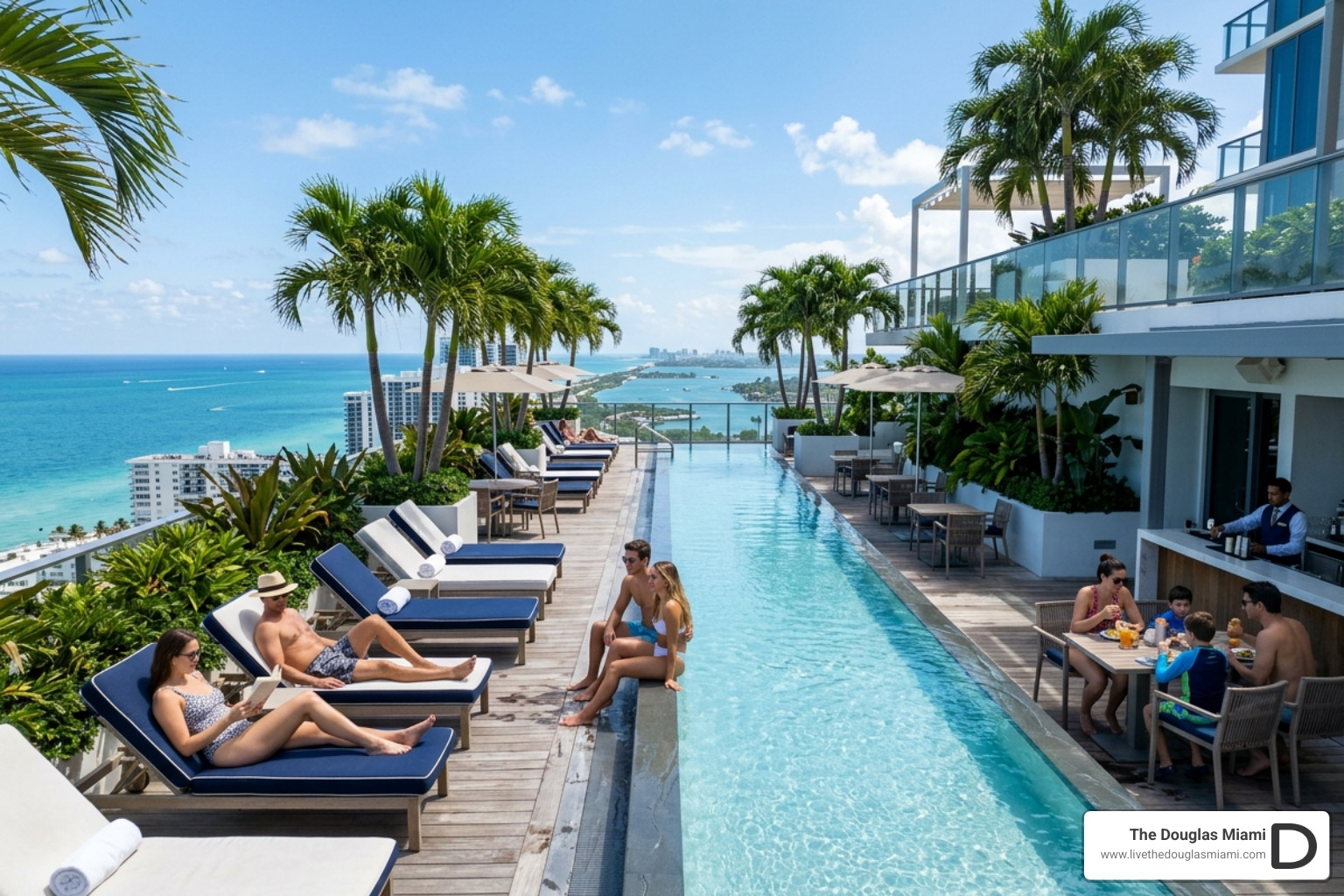
- The "Stay-In" Amenity Suite: We’ve moved beyond just a basic gym. Modern buildings now feature coworking lounges, rooftop pools, and even niche additions like pickleball courts and golf simulators.
If you are currently in the market, check out our Apartment Hunting Tips to help you navigate these feature-rich properties.
Architectural Icons and Innovations in the Magic City
Miami is a playground for world-renowned architects who are pushing the boundaries of what miami mixed use buildings can be. We aren't just building boxes; we are building sculptures.
Modern Miami architecture has reimagined traditional structures, creating open concrete designs that double as world-class event spaces and retail hubs. By ditching the traditional facade, architects have created buildings that breathe with the city, offering panoramic views and varying ceiling heights that accommodate everything from high-end fashion shows to yoga classes.
In North Miami and the downtown core, new developments are making waves with towers featuring hundreds of fully furnished residences and massive "high-street" retail components. The design for these modern marvels often goes through rigorous reviews, such as the UDRB Design Approval for ODP Architects, ensuring that every new addition to our skyline meets the highest aesthetic and functional standards.
Multifunctional Spaces and Sculptural Design
The trend in 2026 is "flexibility." Architects are designing spaces that can evolve. New projects in the urban core are perfect examples, featuring tens of thousands of square feet of amenities distributed across multiple floors and rooftops. Located near the developing 33-acre Signature District, these buildings are designed to connect residents to a massive network of green spaces and cultural institutions like the Pérez Art Museum Miami.
These buildings prioritize:
- High Ceilings & Natural Light: Creating an airy, loft-like feel even in high-rise settings.
- Panoramic Views: Utilizing floor-to-ceiling glass to make the Biscayne Bay or the Miami skyline a permanent part of the interior decor.
- Event Integration: Designing parking levels or rooftops that can be quickly converted into party venues or art galleries.
Investing in the Future: Market Trends and Economic Benefits
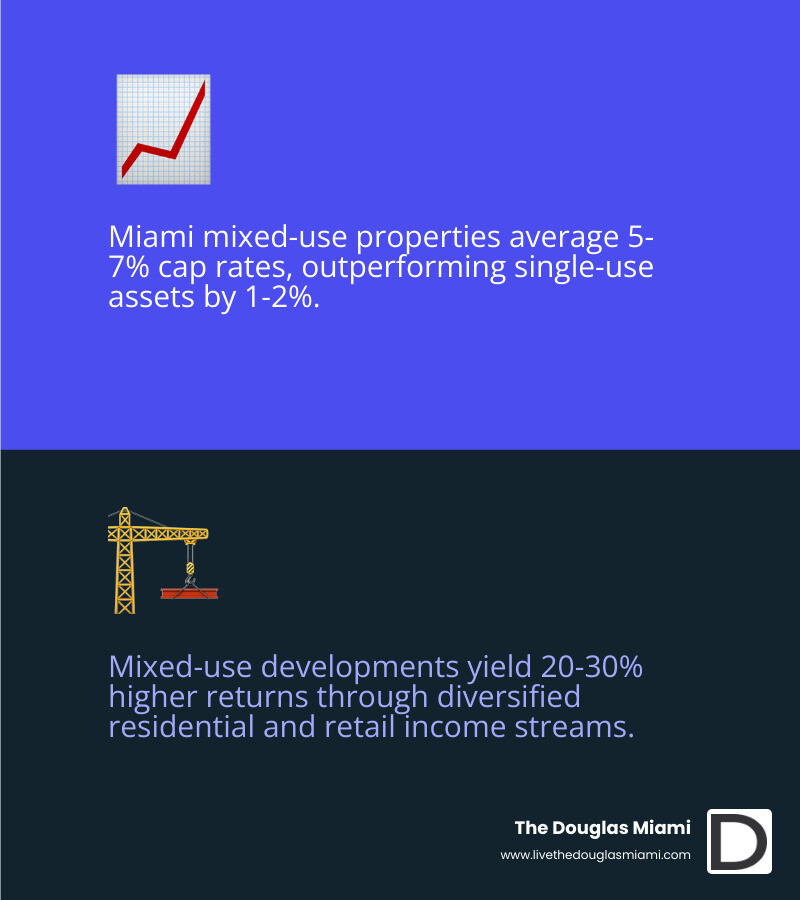
From an investment perspective, miami mixed use buildings offer a diversity of income streams that single-use buildings simply can't match. When the residential market slows, retail can pick up the slack, and vice versa.
According to recent data from LoopNet and CityFeet, the Miami-Dade market remains incredibly active. Here is how the numbers break down for properties currently available:
| Property Type | Location | Price | Size (SF) | Cap Rate |
|---|---|---|---|---|
| Medical Mixed-Use | North Miami (NE 125th St) | $2,475,000 | 3,747 | ~6.5% |
| Retail/Office | Miami (NE 2nd Ave) | $9,350,000 | 5,385 | 5.75% |
| Large Scale Multi-Unit | Downtown Miami | $30,000,000 | 71,768 | 4.3% |
| Showroom/Mixed | Wynwood | $5,950,000 | 7,745 | 7.11% |
For the latest deep dives into these numbers, our Market News section is an essential resource for investors. You can also browse live listings at Miami, FL Mixed Use Properties for Sale to see the current inventory.
Investment Strategies and Portfolio Growth
Investors in Miami typically follow one of three main strategies:
- Core Assets: These are properties with 90% or higher occupancy, like established luxury towers in Brickell. They offer stable, long-term returns.
- Value-Add: Properties with 60-90% occupancy that require some renovation or better management to reach their full potential.
- Opportunistic: These are new developments or properties with low occupancy (under 60%) that offer the highest risk but the highest potential reward.
Many of these properties utilize Triple Net (NNN) leases, where the tenant is responsible for taxes, insurance, and maintenance, making it a favorite for "hands-off" investors. You can find a wide range of these opportunities on the Miami Mixed Use Properties - CityFeet directory.
Navigating the Miami Real Estate Landscape
While the opportunities are vast, navigating the Miami market requires a keen eye. A challenge for developers is the sheer cost of land and construction, which is why we see so many projects utilizing the Live Local Act to maximize their footprint.
However, the opportunities often outweigh the hurdles. When we look at the The Douglas in Little River, we see a neighborhood that is being revitalized through thoughtful, mid-rise development. Unlike the towering skyscrapers of Brickell, these projects focus on community integration, offering a more "human-scale" urban experience.
Compared to other Florida cities, Miami’s mixed-use inventory is significantly more robust. While Florida City might offer lower entry prices (with retail buildings around $2.3 million), the rental demand and appreciation potential in Miami proper and North Miami remain the gold standard for Florida real estate.
Frequently Asked Questions about Miami Mixed Use Buildings
What are the typical price ranges for mixed-use properties in Miami?
In 2026, entry-level mixed-use properties (like a freestanding retail/office building in North Miami) start around $1.5 million. However, larger portfolios in prime areas like Wynwood or Downtown can exceed $30 million. For luxury residential condos within these buildings, prices vary by square footage, but fully furnished studios in major developments often start in the mid-$400k range.
How does the Live Local Act impact development density in 2026?
The Live Local Act is a massive driver for density. It allows us to build up to the highest allowed density in the county and match the height of the tallest building within a one-mile radius, provided that at least 40% of the residential units are designated as workforce housing for at least 30 years. This has allowed for 25-story towers in areas that were previously limited to much lower heights.
What are the most popular neighborhoods for mixed-use living in Miami-Dade?
- Brickell: The "Manhattan of the South," known for its iconic luxury skyscrapers.
- Wynwood: The heart of the arts district, perfect for those who want a creative, walkable vibe.
- Downtown/Park West: Home to the upcoming Signature District and massive urban revitalization projects.
- Little River/North Miami: An emerging hub for those looking for luxury amenities with a neighborhood feel.
Conclusion
The "Mixed-Use Magic" of Miami is more than just a real estate trend; it is a fundamental shift in our urban DNA. We are moving toward a future where the "commute" is just an elevator ride away, and where your backyard is a 33-acre public park or a rooftop pool deck.
At The Douglas, we are proud to be a part of this transformation. Our 12-story mixed-use building at 7737 NE 2nd Ave in Miami's Little River neighborhood is designed for the modern Miamian. With 191 modern units and 8,000 square feet of ground-floor retail, we’ve created a space that balances luxury with community. Whether you’re perfecting your swing in our golf simulator, challenging a neighbor on the pickleball court, or taking in the skyline views, life here is lived around the clock.
Ready to find your place in the Miami skyline? Visit our Home page to explore our floor plans and see why the future of Miami living is mixed-use.

CONTACT US
Everything starts with hello. Fill out the form below to stay in the loop with updates on The Douglas.
