The Anatomy of a Perfect Mixed Use High Rise

.svg)

What Makes a Mixed Use High Rise the Future of Urban Living
A mixed use high rise is a tall building that stacks multiple functions — residential, office, retail, dining, and more — into a single vertical structure. Instead of one building doing one thing, it does many things at once.
Here's a quick breakdown of what defines a mixed-use high-rise:
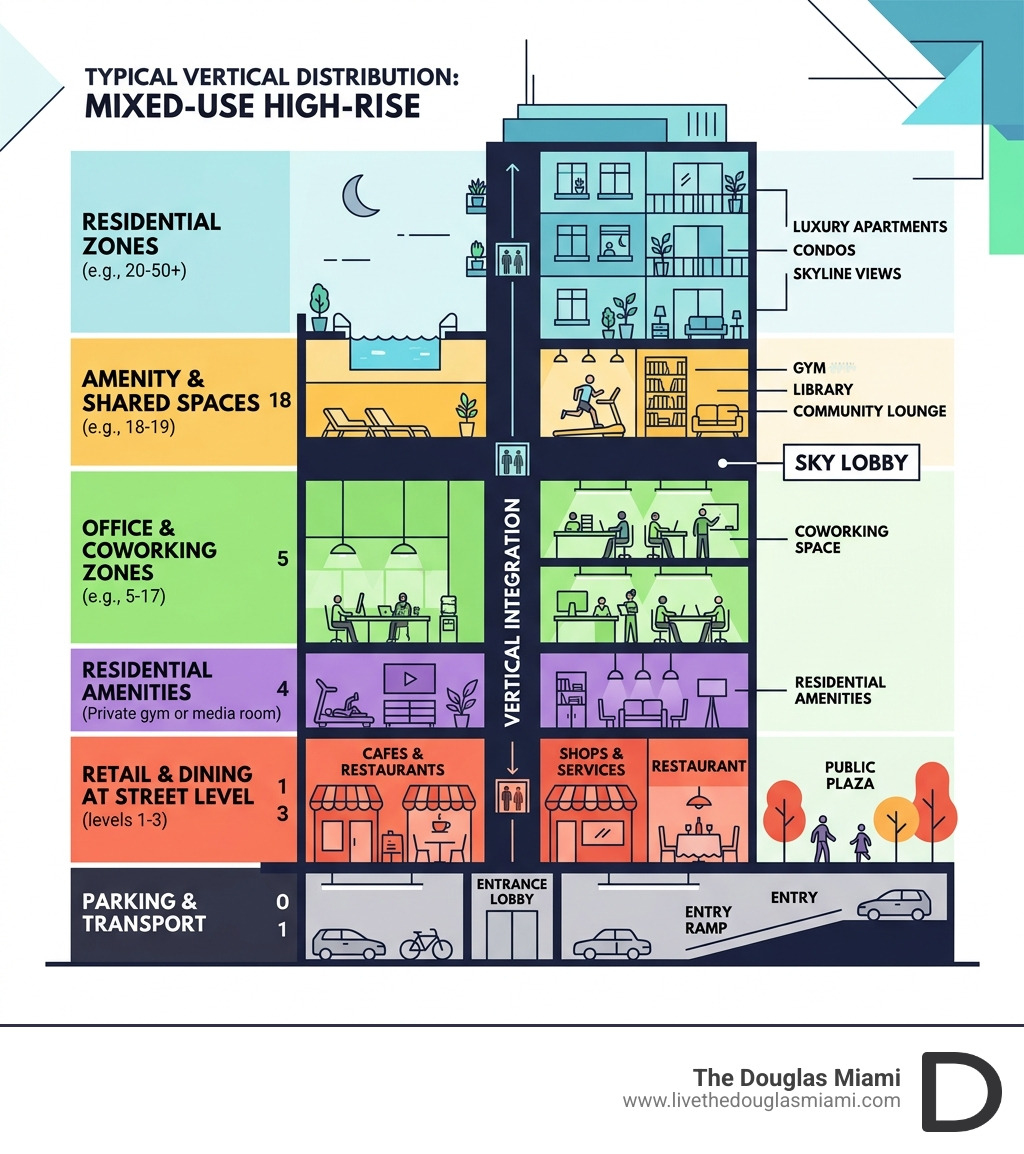
- Residential floors — apartments or condos, typically on upper levels
- Office or coworking space — usually in the middle floors
- Retail and dining — almost always at street level
- Shared amenities — rooftop pools, fitness centers, lounges, and more
- Parking — often integrated into a podium or lower floors
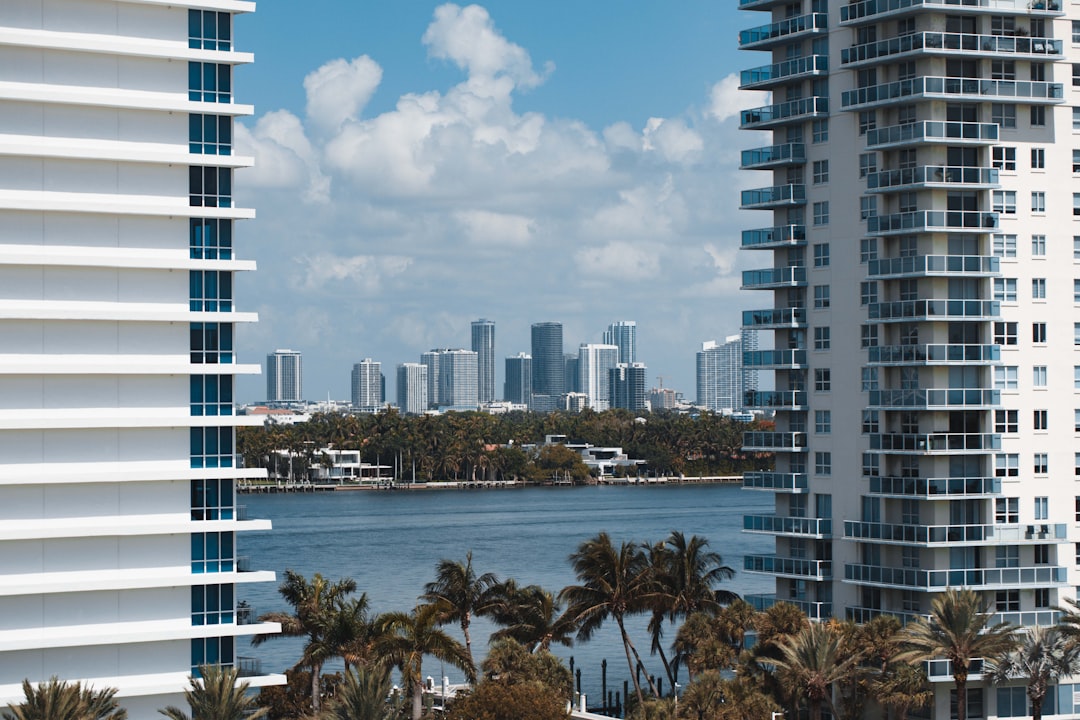
This "vertical neighborhood" model is reshaping how people live in cities — and Miami is one of the fastest-growing examples of that shift.
For decades, cities built single-use zones: offices here, homes there, shops somewhere else. You drove between all of them. That model is fading fast. Today's most desirable urban buildings bring everything into one place — so your commute might just be an elevator ride.
The numbers back this up. Projects like the Sixth and Guadalupe tower in Austin pack 66 stories with residential units, Class A office space, retail, and parking into a single address. In San Francisco, Fifteen Fifty rises 40 floors with over 1.2 million square feet combining apartments, offices, and retail. These aren't exceptions — they're the new standard.
For people who want to live, work, and spend their time in one vibrant, walkable place, the mixed-use high-rise is the clearest answer modern urban design has produced.
Defining the Modern Mixed Use High Rise
To truly understand the mixed use high rise, we have to look at how it differs from the traditional skyscrapers of the 20th century. In the past, a high-rise was usually an "office tower" or an "apartment building." If you lived in one, you left it to go to work. If you worked in one, you left it to go home.
A modern mixed use high rise functions as a "city within a city." It is characterized by functional integration, meaning the different parts of the building aren't just adjacent—they are designed to work together. For example, a resident might grab coffee at the ground-floor retail shop, head to a coworking suite on the 5th floor for a meeting, and then return to their 12th-floor luxury units for the evening.
Single-Use vs. Mixed-Use High-Rises
| Feature | Single-Use High-Rise | Mixed-Use High-Rise |
|---|---|---|
| Primary Function | One (e.g., only residential or only office) | Multiple (Residential, Retail, Office, Hotel) |
| Activity Cycle | 8–10 hours (ghost town after hours) | 18+ hours (active day and night) |
| Pedestrian Flow | Low; usually requires commuting | High; promotes walking and transit |
| Economic Diversity | High risk if one sector dips | Lower risk due to multiple revenue streams |
| Community Feel | Isolated | Integrated "Vertical Neighborhood" |
This shift toward Miami Mixed Use Buildings is driven by a desire for pedestrian connectivity. When we design these structures, we aim to create a seamless transition between the private life of the residents and the public life of the street. This creates what urban planners call "18-hour activity"—a building that stays alive and safe because people are using it at all hours of the day and night.
Strategic Benefits of Mixed-Use High-Rise Development
Why are we seeing so many of these buildings popping up in Miami and beyond? It’s because they solve several urban problems at once. As we look at the landscape in April 2026, the push for "smart growth" has never been stronger.
Smart Growth and Transit-Oriented Development (TOD)
A mixed use high rise is the ultimate tool for smart growth. By building "up" instead of "out," we reduce urban sprawl and protect green spaces. These buildings are often the cornerstone of Transit-Oriented Development. When a high-rise is located near a transit hub, it encourages residents to ditch their cars in favor of walking or public transport. In fact, many modern designs, like Society Atlanta, have successfully reduced parking by over 50% of the zoning maximum to promote a more walkable, transit-friendly environment.
Economic Resilience
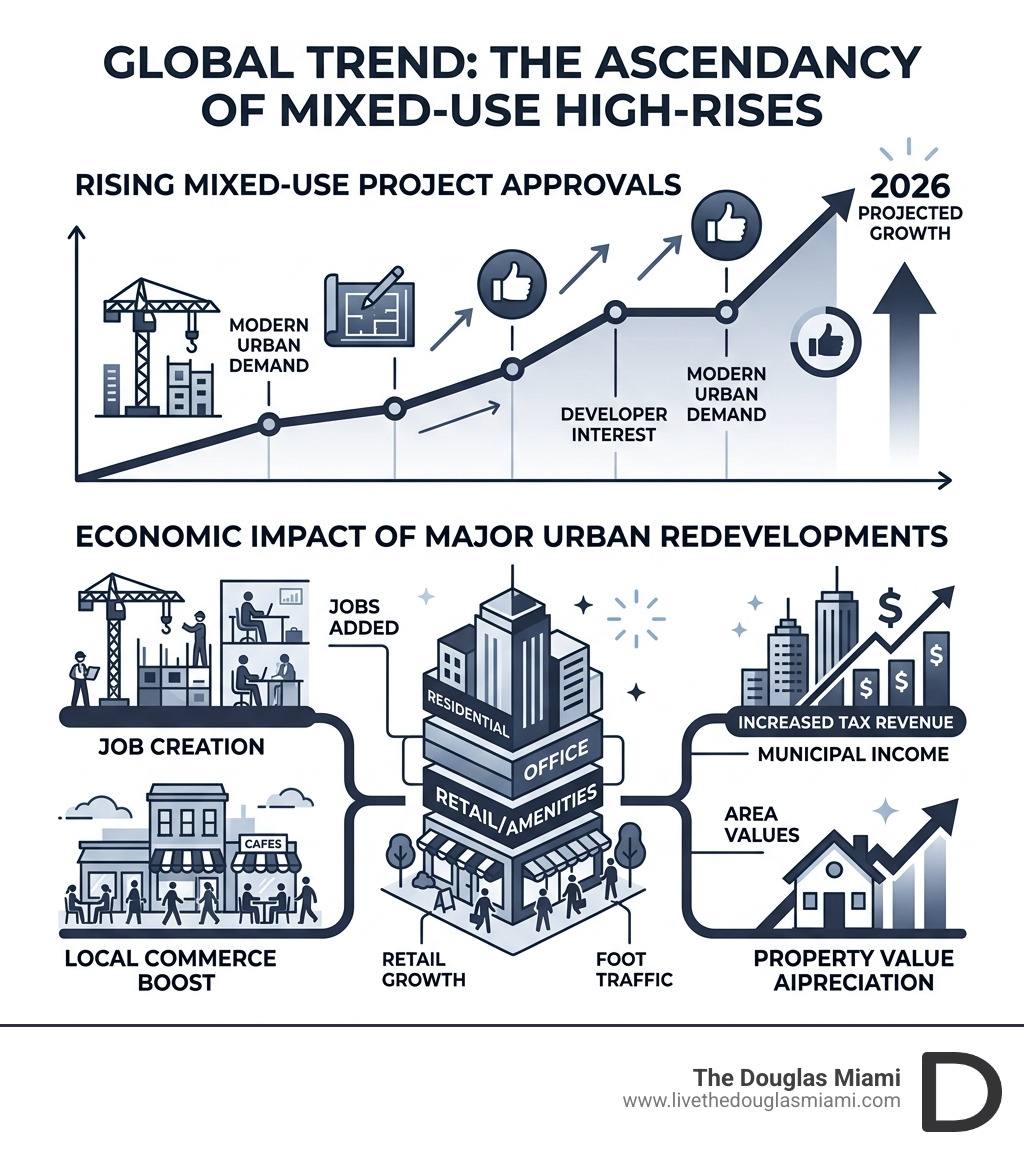
From an investment standpoint, mixing uses is just plain smart. If the office market takes a hit, the residential and retail portions can keep the building profitable. We see this in massive projects like the City of Miami Approves $2 Billion Midtown Park Mixed-Use Development, where a blend of uses creates a stable, vibrant micro-economy.
Social Vitality
Mixed-use buildings foster community. Instead of living in a "bedroom community" where you never see your neighbors, residents in a mixed use high rise interact in shared lounges, rooftop gardens, and ground-floor cafes. This social vitality is what makes city living exciting. It’s about more than just a roof over your head; it’s about being part of a thriving ecosystem.
Engineering and Design Innovations in a Mixed Use High Rise
Building a 12-story or 70-story tower that houses both a quiet bedroom and a bustling restaurant requires some serious architectural magic. Innovation is the name of the game here.
The Amenity Revolution
In the past, a "luxury amenity" might have just been a small gym in the basement. Today, we are seeing a massive shift. Modern high-rise apartments miami-fl often allocate 10-12% of total tenant space to shared amenities.
These aren't just "extras"—they are essential parts of the lifestyle. Common features now include:
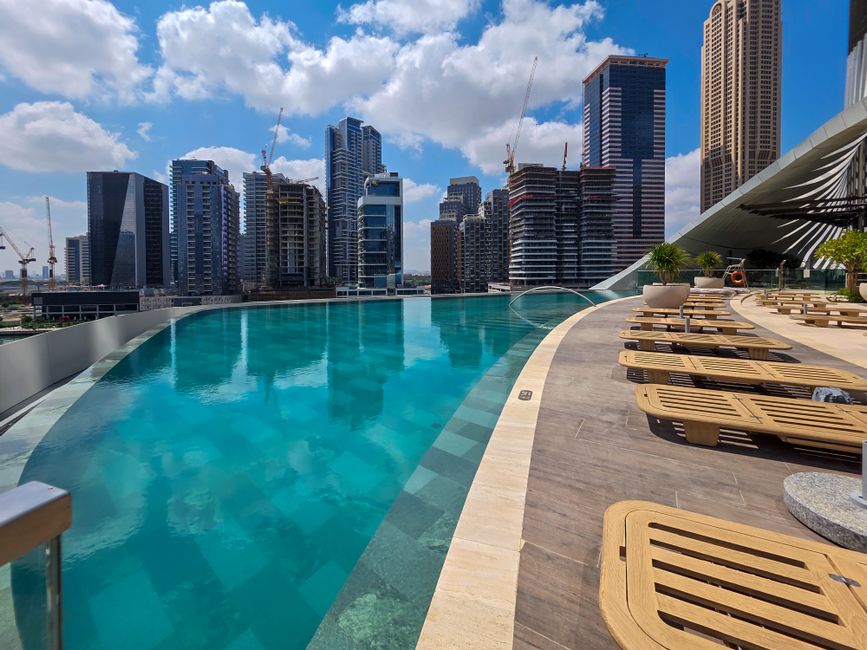
- Skyline pool decks with event-ready turf lawns.
- Coworking hubs with private offices and conference rooms.
- Wellness centers featuring spas, hot tubs, and high-end fitness equipment.
- Specialty recreation, such as pickleball courts and golf simulators, which cater to the specific hobbies of modern residents.
For a deeper dive into what makes these spaces work, check out our 12-story luxury amenities guide.
Maximizing Leasable Space in a Mixed Use High Rise
Engineering plays a quiet but critical role in making these buildings viable. To keep the building profitable, we have to maximize leasable space. This means being incredibly efficient with Mechanical, Electrical, and Plumbing (MEP) systems.
One clever strategy involves adding a mezzanine level above maintenance or trash areas. This allows engineers to elevate plumbing and electrical equipment, freeing up more of the ground floor for high-value retail.
We also utilize loop water systems. These systems maintain a water temperature range (typically between 62°F and 83°F), allowing the building to transfer heating and cooling loads between different zones without using extra energy. For instance, the heat generated by a busy afternoon in the office floors can be repurposed to help heat the water for the residential units above. This is a core part of creating a high-performance 191-unit mixed-use building complete guide.
Sustainability and Health Standards
As of 2026, a mixed use high rise is expected to be more than just "green"—it needs to be "healthy."
- LEED Gold Standards: This focuses on the building's impact on the environment, using energy-efficient facades and water-saving systems.
- WELL Certification: This is a newer standard that focuses on the people inside. It measures things like indoor air quality, access to natural light, and biophilic design (integrating plants and natural materials) to reduce stress and improve mental health.
Overcoming Challenges in Mixed-Use High-Rise Construction
It’s not all sunshine and rooftop cocktails; building these structures is incredibly complex.
Zoning and History
Historically, North American zoning was designed to separate uses. This was often rooted in post-industrial concerns about keeping residential areas away from "dirty" factories. Overcoming these old "single-use" rules requires navigating complex city approvals and often purchasing "air rights."
A classic example is the City Spire | Mixed-Use High-Rise In Manhattan | Central Park. To reach its 72-story height, the developers had to contribute millions of dollars to local cultural institutions like the NYC Opera and Ballet in exchange for the right to build higher.
The Noise Factor
How do you make sure someone sleeping on the 10th floor isn't kept awake by the music from the 1st-floor restaurant? This requires advanced acoustic engineering. Strategies include placing "buffer floors" (like office or parking levels) between the noisy retail and the quiet residential zones. At City Spire, for example, the office and amenity spaces occupy floors 1–25, while the residences start at floor 26 to get away from street noise.
Financing Risks
Banks used to be wary of mixed-use projects because they didn't fit into a neat box. Financing a $500 million tower like The Helm in Miami requires a sophisticated understanding of multiple markets (retail, office, and residential) simultaneously.
Future Trends: The Next Generation of Living
As we look toward the future of the mixed use high rise, several exciting trends are emerging.

Integration with Smart City Technology
Future high-rises won't just sit in a city; they will talk to it. Imagine a building that knows when the next train is arriving at the nearby station and adjusts the elevator speeds to ensure you make it on time. Or a facade that automatically tints based on the sun's position to keep the building cool without blasting the AC.
Post-Pandemic Design
The events of the early 2020s changed how we view our homes. Modern high-rise apartments miami now prioritize:
- Touchless technology in elevators and entryways.
- Advanced air filtration systems that exceed standard hospital grades.
- Flexible "flex" rooms in apartments that can easily transition from a guest bedroom to a high-tech home office.
Community Vitality and the "Food Incubator"
We are seeing a move away from generic retail toward "curated" experiences. Instead of a big-box store, new high-rises are hosting food incubators—spaces where local chefs can test new restaurant concepts. This keeps the ground floor exciting and gives residents a reason to stay on-site.
Frequently Asked Questions about Mixed-Use High-Rises
What defines a mixed-use high-rise?
A mixed use high rise is a building, typically over 10 stories, that integrates at least three different functional uses—such as residential, office, and retail—into one physically and functionally connected structure. It often features a "podium" for retail and parking, with towers for living and working stacked on top.
How do mixed-use buildings improve urban sustainability?
They improve sustainability by promoting density. By housing hundreds of people on a small land footprint, they reduce the need for suburban sprawl. Furthermore, their proximity to transit and work reduces carbon emissions from daily commutes. High-performance MEP systems, like loop water cooling, also significantly lower energy consumption compared to multiple single-use buildings.
What are the most common amenities in modern high-rises?
While gyms and pools are standard, "next-gen" amenities include coworking suites, rooftop dining, pet spas (with a two-pet limit), pickleball courts, and golf simulators. Many buildings now also include package concierge services and car-sharing lounges to cater to the modern, tech-savvy resident.
Conclusion
The mixed use high rise is more than just a building; it is a lifestyle. By blending the best of luxury living with the convenience of an urban hub, these structures are defining the skyline of Miami and beyond.
At The Douglas, we are proud to be at the forefront of this movement. Our 12-story Miami 12 Story Luxury Apartments offer a perfect example of this "anatomy" in action—combining 191 modern residential units with 8,000 square feet of vibrant retail and premium amenities like our skyline views and pickleball court.
Whether you are looking for a place to live, work, or play, the future is vertical. We invite you to explore what it means to live in a perfectly designed urban ecosystem.
To learn more about our community and the future of Miami living, visit us at https://www.livethedouglasmiami.com.

Related Posts

CONTACT US
Everything starts with hello. Fill out the form below to stay in the loop with updates on The Douglas.
