The Ultimate Guide to Modern Mixed-Use Miami Living

.svg)
What Is Modern Mixed-Use Miami Living?
Modern mixed-use Miami living means residing in a development where homes, offices, retail, restaurants, and amenities all exist within a single walkable environment — so your commute might be just an elevator ride.
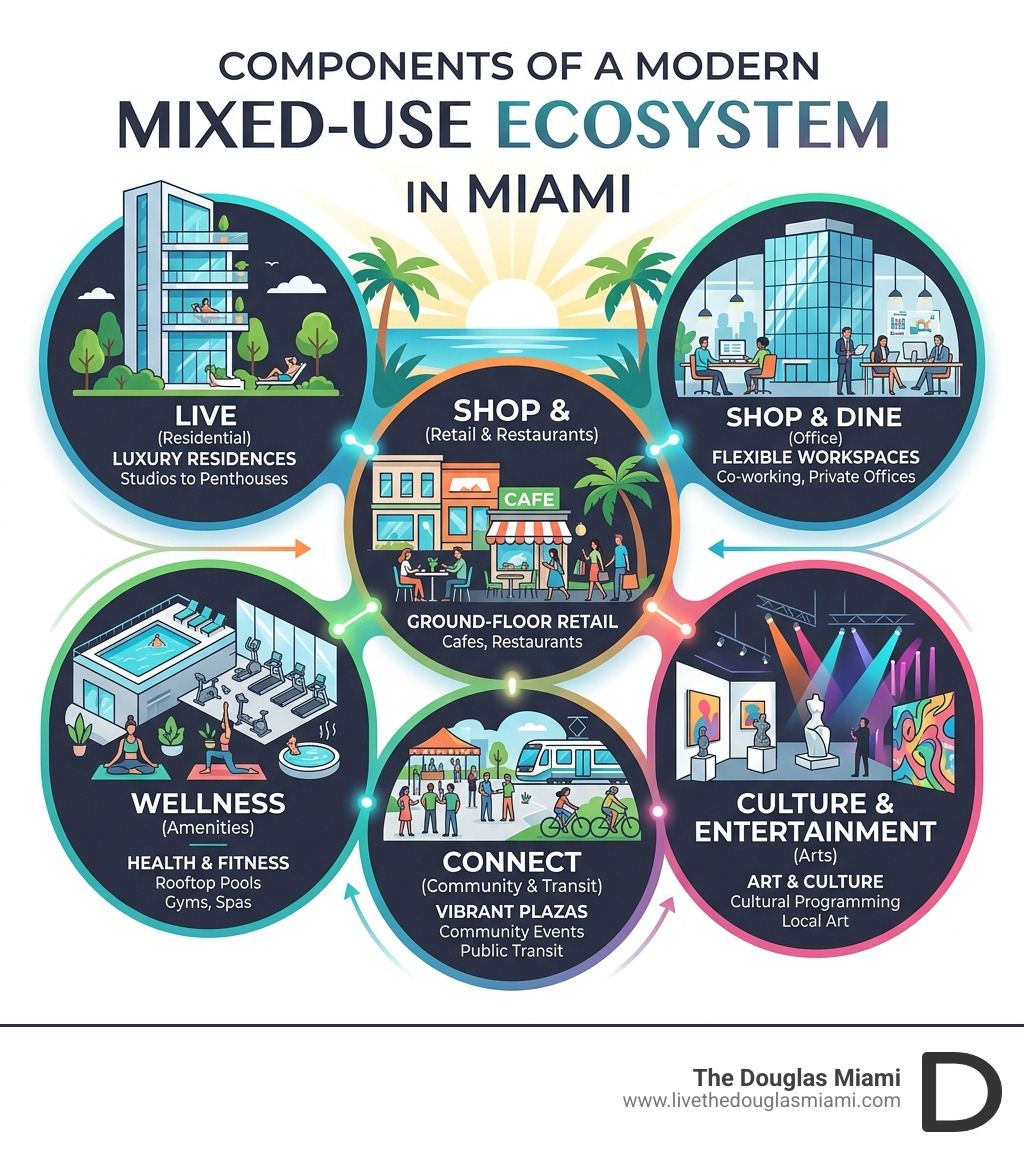
Here's a quick snapshot of what defines this lifestyle:
- Live: Luxury residences ranging from studios to penthouses with premium finishes
- Work: Dedicated office suites, co-working lounges, and high-speed connectivity on-site
- Shop & Dine: Ground-floor retail, cafes, and restaurants steps from your front door
- Wellness: Rooftop pools, fitness centers, spas, and yoga studios in the building
- Connect: Curated community events, cultural programming, and transit access built in
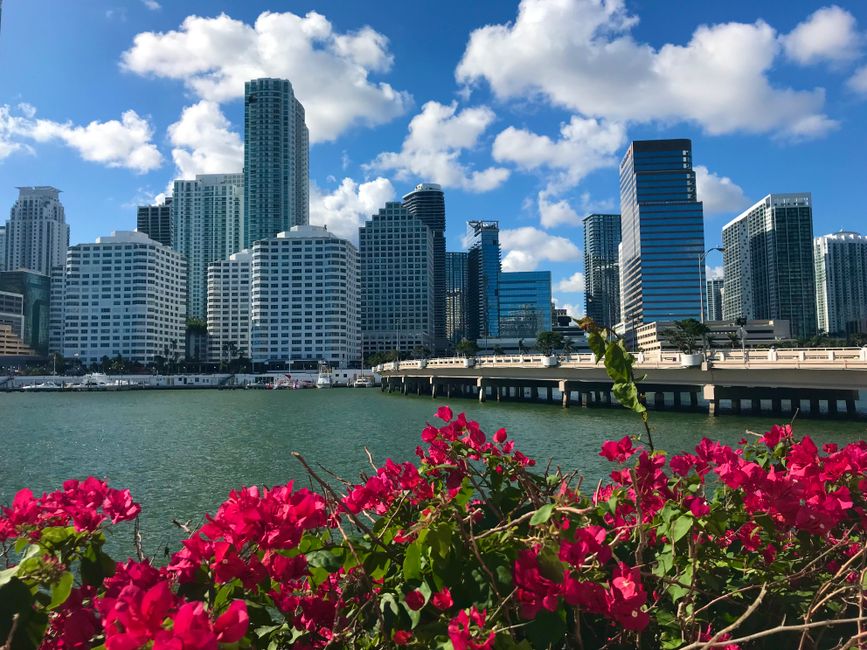
Miami is in the middle of a genuine urban renaissance. Neighborhoods like Brickell, Edgewater, Wynwood, and Downtown are being reshaped by a new generation of developments that blend residential towers with commercial space, hospitality, and public plazas — all designed around a 24/7 lifestyle.
The numbers back it up. Offices inside these so-called "Lifestyle Markets" reach 90% occupancy twice as fast as standard office buildings, and stabilize at nearly 5% higher occupancy rates. Meanwhile, more than 70% of renters say health-related amenities are important or very important when choosing where to live.
This guide covers everything you need to know — from standout projects and top neighborhoods to investment opportunities and what daily life actually looks like inside Miami's most forward-thinking mixed-use communities.
The Rise of Modern Mixed-Use Miami Living

As we look at the landscape of Miami in April 2026, the shift toward integrated living is no longer just a trend—it is the standard. For decades, Miami was a city defined by its car culture and sprawling suburbs. Today, we are seeing a dramatic pivot toward urban connectivity. People are tired of spending an hour on the Palmetto or I-95 just to grab a coffee or get to the office.
This evolution is driven by the rise of "Lifestyle Markets." These are areas where mixed-use developments are clustered to create larger entertainment and business districts. The demand for these spaces is reflected in the commercial data: offices in these lifestyle-centric hubs are 76% leased on average, compared to 70% for typical new office buildings. Because these buildings offer a built-in audience of residents and visitors, they create what we call "crossover revenue." A resident grabs breakfast at the ground-floor cafe, an office worker buys lunch at the retail plaza, and a visitor stays at the integrated hotel.
To understand how these spaces function, we can look at Miami's Top Mixed-Use Developments with Office Spaces - miamipre , which highlights how "live, work, and thrive" has become the mantra for the modern Miamian. By balancing different asset classes—residential, retail, and office—investors and developers reduce risk. If one sector slows down, the others keep the ecosystem vibrant.
Redefining the Modern Mixed-Use Miami Living Experience
The newest wave of modern mixed-use Miami living is heavily influenced by hospitality. It is no longer enough to just have a lobby; residents want a curated experience. This is where "hospitality integration" comes in. We are seeing luxury lifestyle brands move beyond the restaurant world and into residential design.
Modern mixed-use developments are perfect examples. These buildings blend soulful art, culture, and five-star service into the daily residential experience. They often feature "flexible residences" that allow for different types of stays, catering to the global citizen who might spend a few months in Miami and the rest of the year abroad. This level of sophistication is exactly what we explore in our deep dive into Mixed-Use Luxury Brickell Living.
The Evolution of Modern Mixed-Use Miami Living Designs
Architecture in Miami has always been bold, but current designs are focusing on how a building interacts with its environment. Firms like Arquitectonica and Sieger Suarez are leading the way, using biophilic elements—think lushly planted terraces and shaded public plazas—to bridge the gap between the concrete jungle and the natural world.
Beyond aesthetics, climate resilience is a massive factor in 2026. With Miami’s unique coastal geography, modern buildings are being constructed with flood-resistant materials, sustainable water management systems, and smart technologies that optimize energy use. These innovations ensure that the Miami Mixed-Use Buildings of today are built to last for the next century.
Leading Neighborhoods in the Mixed-Use Revolution
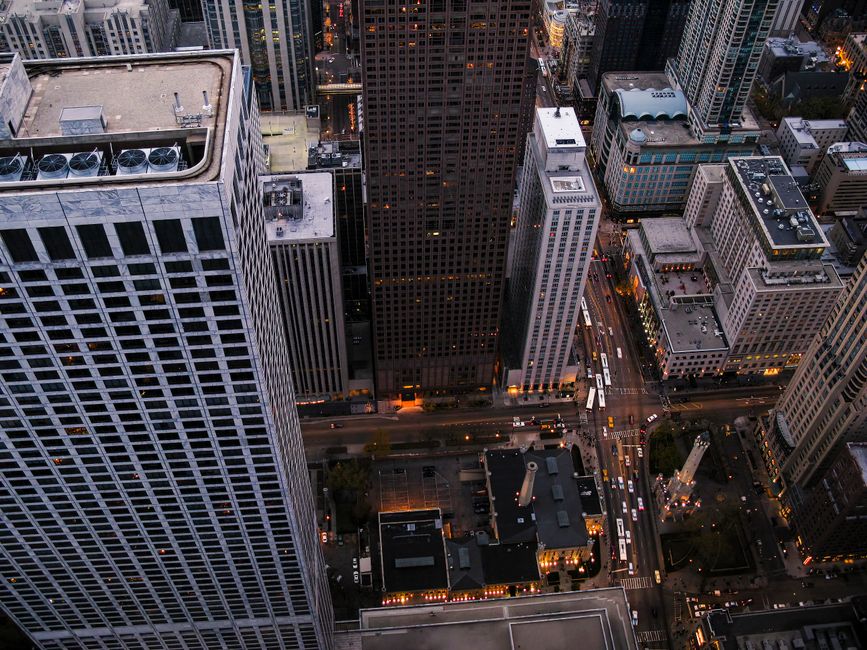
If you want to see the mixed-use revolution in action, you have to look at the neighborhoods that are leading the charge. Brickell remains the "Wall Street of the South," but it has transformed from a 9-to-5 financial district into a 24/7 neighborhood. With the success of 830 Brickell—where 95% of the office space was pre-leased long-term by giants like Citadel and Microsoft—the demand for nearby luxury housing has skyrocketed.
Edgewater is another major player, emerging as a premier urban hub. New residential projects are redefining the skyline here, offering upscale apartments paired with commercial elements that capitalize on the neighborhood's bayfront views. Meanwhile, the Arts & Entertainment District is seeing innovative towers that use organic architectural elements to serve as both a foundation and a piece of public art.
For those interested in the technical side of how these neighborhoods are approved and built, the UDRB Approves Updated Design For ODP Architects' 12-Story ... provides a fascinating look at the planning process for mid-rise luxury developments.
Transit-Oriented Hubs and Master-Planned Communities
One of the most exciting shifts in modern mixed-use Miami living is the move toward Transit-Oriented Development (TOD). Large-scale master-planned communities are the gold standard for this. These developments are purpose-built to integrate with the SMART Plan’s major east-west transit corridor.
These micro-cities often feature:
- Over 1,000 residences (including garden apartments and multifamily units)
- Extensive retail space
- Significant commercial and office space
- Integrated hotel options
- Substantial economic impact over the long term
By positioning these developments next to multimodal transit exchanges, such as the Dolphin exchange, they offer a real alternative to car-dependent suburban living.
Cultural Integration in Wynwood and Downtown
In Wynwood, mixed-use living takes on a more artistic flavor. New developments draw inspiration from the area's history as a textile district, incorporating those colors and patterns into their facades. These projects prioritize the "spaces in between"—the parks and plazas where community interaction actually happens.
In Downtown, the Signature Bridge project is adding 33 acres of green space known as the "Underdeck." This will create a massive urban park system that connects residents to the waterfront, museums, and performing arts centers, making "walkability" a reality rather than just a marketing buzzword.
Standout Features of Miami’s Mixed-Use Residences
What does it actually feel like to live in one of these buildings? In 2026, the amenities are designed to support a balanced, high-performance lifestyle. We aren't just talking about a basic gym. Modern residences feature full wellness centers with saunas, cold plunges, and yoga studios.
At The Douglas, we’ve seen how popular specialized amenities have become. Our residents love having access to a pickleball court and a golf simulator right on-site. These features foster a sense of community that you simply don't find in traditional apartment blocks. For a full breakdown of what to expect, check out our 12-Story Luxury Amenities Guide.
Hybrid Work-Live Models
The post-pandemic world has made the "elevator commute" the ultimate luxury. Modern developments have pioneered the hybrid model by offering dedicated office suites.
These aren't just "business centers" with a shared printer. In many cases, these are professional office spaces available to residents. You can work in a professional environment, host meetings, and maintain a social office life, all without leaving your building. This model is perfect for professionals who want the focus of an office with the convenience of home.
Short-Term Rental Flexibility and Hospitality
Flexibility is a major theme in modern mixed-use Miami living. Many new towers allow for short-term rental options. This is a game-changer for owners who want to generate income while they are away.
These residences often come "turnkey," meaning they are fully finished and furnished by world-class designers. When you combine this with resort-style pools, on-site cafes, and curated weekly events like rooftop parties or chef-led dinners, the line between "home" and "vacation" begins to disappear.
Connectivity and Sustainable Urban Growth
The future of Miami depends on how we handle growth. Mixed-use developments are the primary tool for creating a more sustainable, less car-reliant city. By concentrating housing, jobs, and transit in the same area, we reduce the carbon footprint of the average resident.
Multimodal access—the ability to easily switch between walking, biking, transit, and ride-sharing—is a core component of these designs. Many developers are now requesting parking reductions (sometimes up to 30%) because their residents simply don't need to own multiple cars. This is a massive step forward for Miami’s urban core.
Economic Impact and Community Integration
These projects are also massive economic engines. Major mixed-use developments are projected to have multi-billion dollar impacts. But beyond the big numbers, mixed-use projects support the local economy by providing a steady stream of customers for ground-floor retail and small businesses.
Community integration is also a priority. These projects create a more diverse and vibrant neighborhood for everyone by fostering shared public spaces and local engagement. This ensures that the urban core remains a welcoming environment for all residents.
24/7 Operations and Management
Managing a mixed-use building is like running a small city. It requires 24/7 operations to ensure that everything from the residential elevators to the retail security runs seamlessly.
Strategic property management is what keeps these ecosystems thriving. At 3 a.m., while residents are sleeping, management teams are coordinating retail deliveries and ensuring the common areas are pristine for the morning rush. This "placemaking" ensures that the property remains a destination for visitors while remaining a peaceful sanctuary for those who call it home.
Frequently Asked Questions about Miami Mixed-Use Living
What are the benefits of living in a mixed-use development in Miami?
The primary benefit is convenience. Having your gym, office, grocery store, and favorite cocktail lounge in the same building or on the same block saves hours of travel time every week. Additionally, these buildings often offer superior amenities and a more active social life than traditional residential-only neighborhoods.
How do mixed-use projects improve Miami's transit and walkability?
By creating "density," these projects make public transit more viable. When thousands of people live and work near a transit station (like the Dolphin multimodal exchange or the Metromover), the city can invest more in those services. They also improve walkability by creating interesting, vibrant, and active streetscapes with retail and public art.
Are pets allowed in modern Miami mixed-use residences?
Yes! Most modern mixed-use developments in Miami are very pet-friendly. In fact, many include dedicated pet spas, grooming stations, and even rooftop dog parks. At The Douglas, we welcome our four-legged residents and understand they are part of the family.
- Two-Pet Limit: Most luxury buildings, including ours, typically have a two-pet limit per residence.
- Pet Spas: On-site washing and grooming stations are common.
- Urban Parks: Proximity to areas like the Underdeck or Bayfront Park provides plenty of space for walks.
Conclusion
The era of modern mixed-use Miami living has officially arrived, and it is transforming the way we think about our city. From transit-oriented master plans to the hospitality-infused luxury of Brickell, these developments are creating a more connected, sustainable, and vibrant Miami.
At The Douglas, we are proud to be part of this urban renaissance. Our 12-story luxury community in the heart of Miami offers 191 modern units and 8,000 square feet of ground-floor retail. Whether you’re looking to practice your swing in our golf simulator, challenge a neighbor on the pickleball court, or simply enjoy the skyline views from our rooftop, we’ve designed a space that balances work, play, and everything in between.
Ready to experience the best of Miami? Visit us at www.livethedouglasmiami.com to learn more about our community and find your next home.

Related Posts
CONTACT US
Everything starts with hello. Fill out the form below to stay in the loop with updates on The Douglas.
